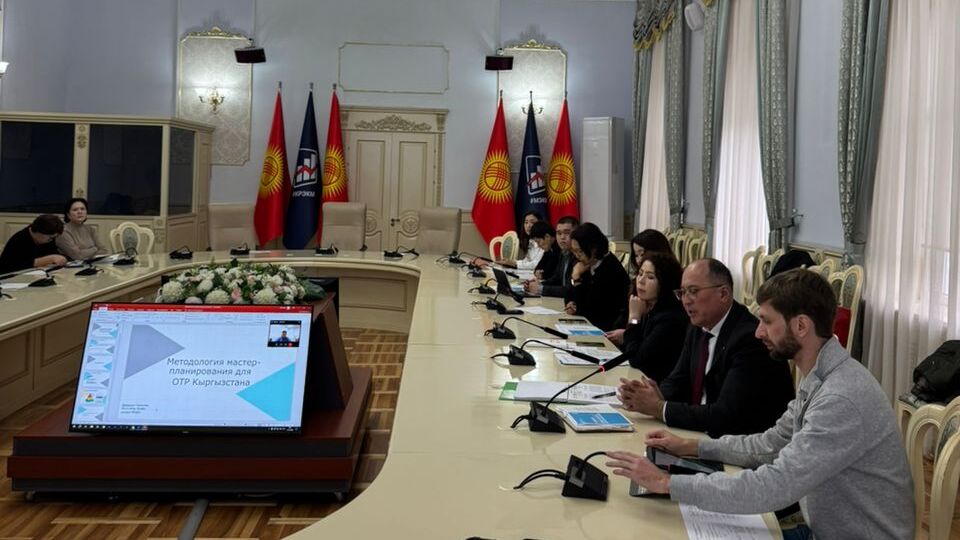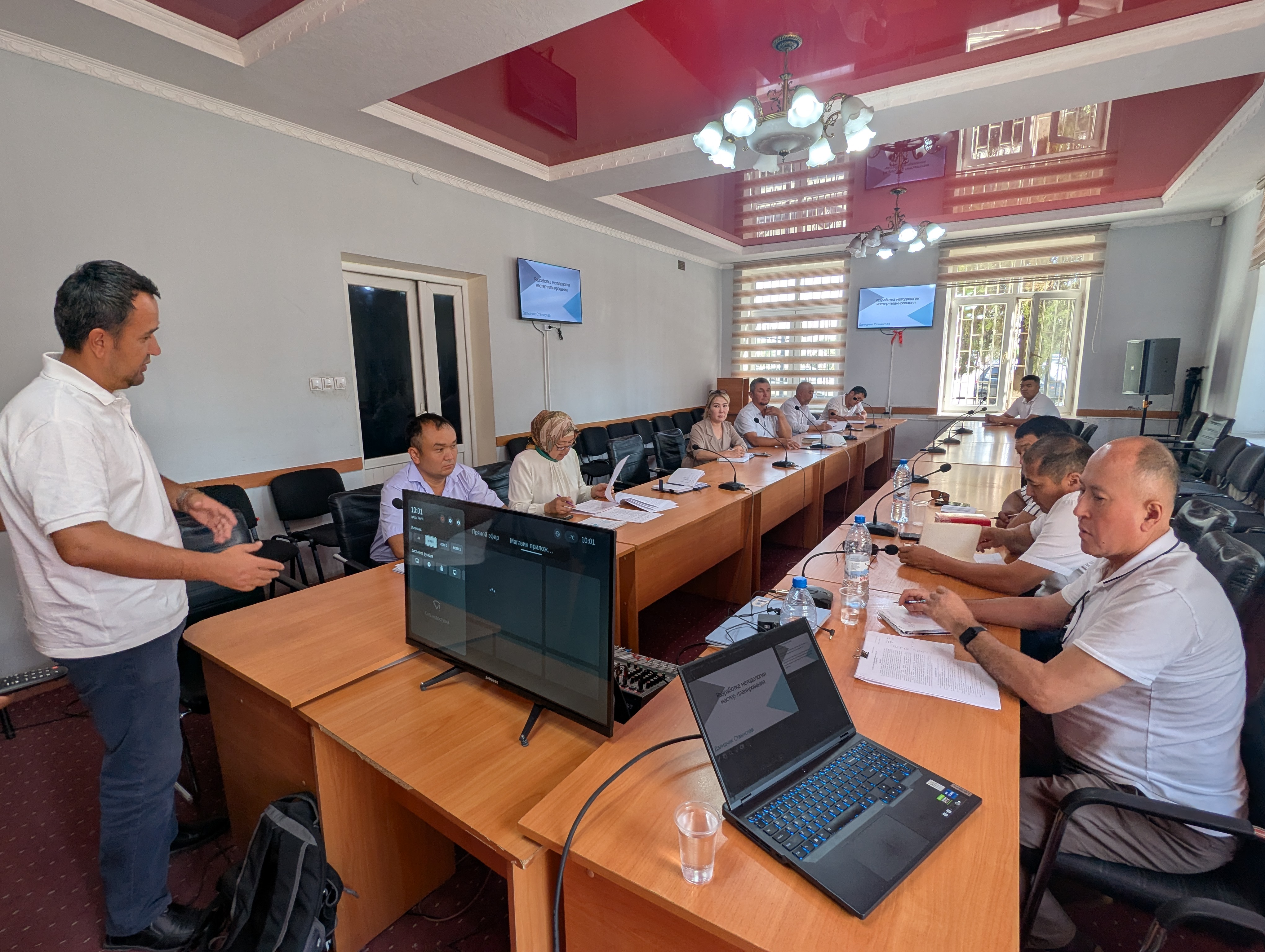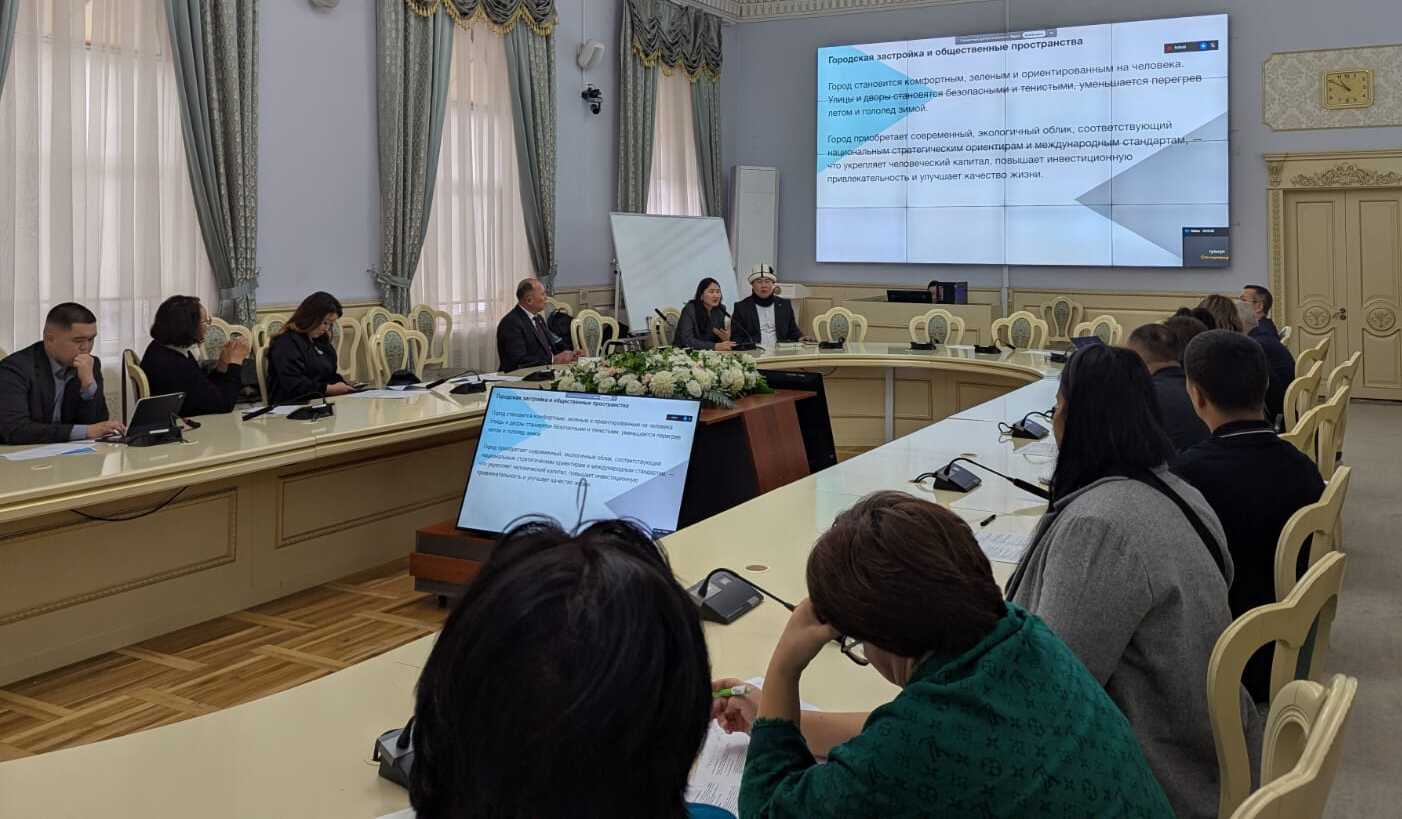

Russia facilitates the development of master planning methodology in Kyrgyzstan
Kyrgyzstan has developed the country’s first unified methodology for master planning of growth hubs. At the request of the Ministry of Economy and Commerce of the Kyrgyz Republic, a Russian expert developed and presented a methodology that defines a standardized approach to developing strategic territorial development documents, shaping a holistic vision for the future development of cities.
The structure of master plans allows for the transformation of general goals, such as improving quality of life, economic development, and environmental improvement, into specific and measurable indicators, such as the number of available places in kindergartens and schools, walkability to parks, and the level of air pollution by PM2.5 particles. [1].
The new methodology, created considering international the best practices and national legislative requirements, will become a unified working tool for the Ministry of Economy and Commerce, as well as for local authorities. Its application will improve the quality of urban and regional development planning and ensure more effective use of state and private investments.
A crucial part of the assignment was targeted training for the Ministry’s staff and representatives of local self-government bodies. Specialists gained access to methodological materials and real-world practical cases, which will enable them to independently apply the new methodology, evaluate master plans, and support local initiatives.
“The development of a unified master planning methodology is an important step towards the systematic development of regions,” noted Choro Seyitov, First Deputy Minister of Economy and Commerce of the Kyrgyz Republic. “We are creating a tool that will allow every city and aimak to plan its future based on accurate data, public engagement, and clear guidelines for sustainable growth.”
The developed methodology is distinguished by its practical focus and replicability: it can be adapted for different regions of the country. This lays the foundation for scaling the approach and forming a sustainable territorial planning system in the Kyrgyz Republic.
The work of the Russian expert is implemented with the financial support of the Russian Federation within the framework of the project "Knowledge Management and Capacity Development in the UNDP-Russia Partnership".
[1] PM 2.5 - ultrafine suspended particles with a diameter of up to 2.5 micrometers (30 times thinner than a human hair), consisting of solid microparticles and liquid droplets. They remain suspended in the air, penetrate deep into the lungs and bloodstream, provoking serious illnesses.